
Adults Helping Kids

Sunday, November 8, 2015

Wednesday, October 28, 2015
Global Missing Children's Network
The Global Missing Children's Network is a multilingual database featuring photos of and information about missing children from around the world. It was launched in 1998 as a joint program of the National Center for Missing & Exploited Children® and International Centre for Missing & Exploited Children®.
Photos are one of the most effective tools in the search for missing children. Rapidly distributing a child's photo can make the difference between a fast recovery and prolonged search.

Photos are one of the most effective tools in the search for missing children. Rapidly distributing a child's photo can make the difference between a fast recovery and prolonged search.

CLICK HERE TO LINK TO MISSING AND EXPLOITED CHILDREN
Friday, October 2, 2015
CELEBRATING THE POWER OF EDUCATION
Three years ago, Malala
Yousafzai was targeted for her outspoken support of girls’ education. But not
even a gun could silence her. In fact, it made her voice ring louder. Since her
brush with death, Malala has made it her life’s purpose to advocate for the
equal rights of all children and was recently the subject of the documentary He Named Me Malala, by
Academy Award-winning filmmaker Davis Guggenheim.
Free The Children is proud to have welcomed Malala in Kenya on a ME to WE Trip where she spent several days speaking to girls about their passion for education at Kisaruni All Girls Secondary School. For many young girls, accessing education is about having the opportunity to reach their full potential as leaders and making a meaningful difference in the world.
Marcella Sang, a Kisaruni graduate and aspiring journalist, shares Malala’s belief in the power of education: “This school has changed my life completely. I have gained leadership skills and I have excelled in academics. When I started Kisaruni, I was shy and not able to address people in public. That’s changed—I have a voice now.”
Join us in celebrating the power of education and help support Free The Children’s education program overseas.

Free The Children is proud to have welcomed Malala in Kenya on a ME to WE Trip where she spent several days speaking to girls about their passion for education at Kisaruni All Girls Secondary School. For many young girls, accessing education is about having the opportunity to reach their full potential as leaders and making a meaningful difference in the world.
Marcella Sang, a Kisaruni graduate and aspiring journalist, shares Malala’s belief in the power of education: “This school has changed my life completely. I have gained leadership skills and I have excelled in academics. When I started Kisaruni, I was shy and not able to address people in public. That’s changed—I have a voice now.”
Join us in celebrating the power of education and help support Free The Children’s education program overseas.
Wednesday, September 30, 2015
FORCED LABOUR IN UZBEKISTAN'S COTTON INDUSTRY
One of the world’s biggest producers and exporters of cotton is Uzbekistan where the repressive Government uses a system of forced labour to produce cotton on a massive scale.
For decades, the government of Uzbekistan, under President Islam Karimov, has forced adults and children as young as 10 to pick cotton under harsh conditions each harvest season

Although the younger children are no longer mobilised in large numbers, local administrations routinely send secondary students (15-17-year-olds) to the fields in some districts.
Uzbekistan is one of the largest producers and exporters of cotton in the world, generating an estimated US$1 billion annually through the export of around 850,000 tonnes of cotton every year. Despite these profits, those ordered to pick the cotton remain impoverished as workers are paid little, if anything.
Farmers are ordered to grow cotton or they risk financial penalties or removal from the land they farm.
Each September the cotton harvest begins. Uzbek citizens such as teachers and doctors are forced out of their regular jobs to spend weeks in the fields picking cotton, often in hazardous conditions and without basic equipment.
Each citizen is given a daily quota. Those who fail to meet their targets, or who pick a low quality crop, are reportedly punished by detention, risk losing their jobs or face harassment from employers or the government.
The work is dangerous, people can be left exhausted, suffer from ill-health and malnutrition after weeks of arduous labour. Those working on remote cotton farms are forced to stay in makeshift dormitories in poor conditions with insufficient food and drinking water.
The government of Uzbekistan harass, intimidate and repress citizens who attempt to monitor the cotton harvest.
Not only those sent out to the fields are affected. Businesses are forced to contribute financially if they want to stay open during harvest time. The provision of public services such as healthcare and education is also severely affected during the harvest.
Despite widespread knowledge of these abuses, textile traders and companies have been complicit by buying and selling Uzbek cotton. And although many companies have pledged not to knowingly use Uzbek cotton, it still ends up in the global supply chains and in a lot of finished products. Many governments and international bodies continue to promote trade with Uzbekistan without regard to ongoing human rights abuses.
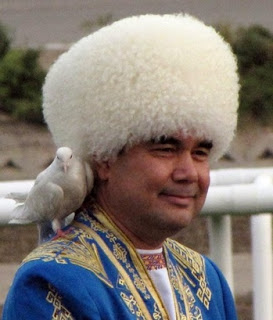
This is the evil and murderous leader of this little known country.
For decades, the government of Uzbekistan, under President Islam Karimov, has forced adults and children as young as 10 to pick cotton under harsh conditions each harvest season

Although the younger children are no longer mobilised in large numbers, local administrations routinely send secondary students (15-17-year-olds) to the fields in some districts.
Uzbekistan is one of the largest producers and exporters of cotton in the world, generating an estimated US$1 billion annually through the export of around 850,000 tonnes of cotton every year. Despite these profits, those ordered to pick the cotton remain impoverished as workers are paid little, if anything.
Farmers are ordered to grow cotton or they risk financial penalties or removal from the land they farm.
Each September the cotton harvest begins. Uzbek citizens such as teachers and doctors are forced out of their regular jobs to spend weeks in the fields picking cotton, often in hazardous conditions and without basic equipment.
Each citizen is given a daily quota. Those who fail to meet their targets, or who pick a low quality crop, are reportedly punished by detention, risk losing their jobs or face harassment from employers or the government.
The work is dangerous, people can be left exhausted, suffer from ill-health and malnutrition after weeks of arduous labour. Those working on remote cotton farms are forced to stay in makeshift dormitories in poor conditions with insufficient food and drinking water.
The government of Uzbekistan harass, intimidate and repress citizens who attempt to monitor the cotton harvest.
Not only those sent out to the fields are affected. Businesses are forced to contribute financially if they want to stay open during harvest time. The provision of public services such as healthcare and education is also severely affected during the harvest.
Despite widespread knowledge of these abuses, textile traders and companies have been complicit by buying and selling Uzbek cotton. And although many companies have pledged not to knowingly use Uzbek cotton, it still ends up in the global supply chains and in a lot of finished products. Many governments and international bodies continue to promote trade with Uzbekistan without regard to ongoing human rights abuses.
This is the evil and murderous leader of this little known country.

Sunday, September 27, 2015

Saturday, September 26, 2015
THE EFFECTS OF WAR ON CHILDREN
http://www.warchildholland.org/effects-war-children
War affects children in all the ways it affects adults, but also in different ways. First, children are dependent on the care, empathy, and attention of adults who love them. Their attachments are frequently disrupted in times of war, due to the loss of parents, extreme preoccupation of parents in protecting and finding subsistence for the family, and emotional unavailability of depressed or distracted parents. The child may be in substitute care with someone who cares for him or her only slightly – relatives or an orphanage. A certain proportion of war-affected children lose all adult protection – “unaccompanied children,” as they are known in refugee situations.
Second, impacts in childhood may adversely affect the life trajectory of children far more than adults. Consider children who lose the opportunity for education during war, children who are forced to move into refugee or displaced person camps, where they wait for years in miserable circumstances for normal life to resume, if it ever does. Consider a child disabled in war; they may, in addition to loss of a limb, sight, or cognitive capacity, lose the opportunity of schooling and of a social life. A girl who is raped may be marginalized by her society and lose the opportunity for marriage. Long after the war has ended, these lives will never attain the potential they had before the impact of war.
Copyright © 2006 by the Croatian Medical Journal. All rights reserved.
This is an open access article distributed under the Creative Commons Attribution License, which permits unrestricted non-commercial use, distribution, and reproduction in any medium, provided the original work is properly cited.
Copyright © 2006 by the Croatian Medical Journal. All rights reserved.
This is an open access article distributed under the Creative Commons Attribution License, which permits unrestricted non-commercial use, distribution, and reproduction in any medium, provided the original work is properly cited.


War affects children in all the ways it affects adults, but also in different ways. First, children are dependent on the care, empathy, and attention of adults who love them. Their attachments are frequently disrupted in times of war, due to the loss of parents, extreme preoccupation of parents in protecting and finding subsistence for the family, and emotional unavailability of depressed or distracted parents. The child may be in substitute care with someone who cares for him or her only slightly – relatives or an orphanage. A certain proportion of war-affected children lose all adult protection – “unaccompanied children,” as they are known in refugee situations.
Second, impacts in childhood may adversely affect the life trajectory of children far more than adults. Consider children who lose the opportunity for education during war, children who are forced to move into refugee or displaced person camps, where they wait for years in miserable circumstances for normal life to resume, if it ever does. Consider a child disabled in war; they may, in addition to loss of a limb, sight, or cognitive capacity, lose the opportunity of schooling and of a social life. A girl who is raped may be marginalized by her society and lose the opportunity for marriage. Long after the war has ended, these lives will never attain the potential they had before the impact of war.
Copyright © 2006 by the Croatian Medical Journal. All rights reserved.
This is an open access article distributed under the Creative Commons Attribution License, which permits unrestricted non-commercial use, distribution, and reproduction in any medium, provided the original work is properly cited.
Copyright © 2006 by the Croatian Medical Journal. All rights reserved.
This is an open access article distributed under the Creative Commons Attribution License, which permits unrestricted non-commercial use, distribution, and reproduction in any medium, provided the original work is properly cited.
Wednesday, September 23, 2015
Hunger and Children
66 million primary school-age children attend classes hungry across the developing world, with 23 million in Africa alone.


Subscribe to:
Posts (Atom)